Luxury apartment communities are designed to feel polished and well-managed from the moment someone walks in. That experience depends on consistent, professional luxury apartment cleaning services operating across every shared space on a daily basis.
From lobbies and concierge desks to elevators and amenity lounges, these areas carry the constant footprint of residents, guests, and staff. Keeping them clean isn’t just about aesthetics — it directly affects leasing outcomes, resident retention, and property value.
Why Common Areas Define the Resident Experience
In high-end residential communities, shared spaces are extensions of each resident’s home. First impressions form in the lobby. Lease renewals are influenced by what residents experience every time they walk through the building.
The business case is clear. According to Zego’s 2025 Resident Experience Management Report, property operators consistently underestimate how much physical upkeep drives resident retention — yet the average multifamily retention goal sits at 63%. A single non-renewal costs a property approximately $4,000 in vacancy loss, make-ready, and marketing expenses.
When common areas are consistently maintained:
- The property signals active, attentive management
- Residents take more pride in shared spaces
- Leasing teams can show units without last-minute prep
- Online reviews — read before most tours are booked — reflect a community worth choosing
Even small lapses — odors, dust buildup, sticky elevator buttons — stand out immediately in luxury environments and can tip renewal decisions the wrong way.
High-Traffic Zones That Require Daily Attention
Not every space sees equal use. Certain zones need structured, professional attention throughout the day — not just a single end-of-day pass.
Elevator buttons, door handles, lobby seating, and reception surfaces are the highest-touch points in any building. Without routine disinfection, they become vectors for bacteria and allergens — a health and reputational risk. Grand View Research notes that floor care alone accounts for over 31% of the cleaning services market share, precisely because high-traffic surfaces demand specialized, consistent care.
Zones requiring daily professional cleaning attention:
- Entryways and reception areas — Hard floors need dry and wet mopping routinely, with added frequency during wet or dusty weather
- Elevators and corridors — Buttons, handrails, walls, and thresholds require daily wiping and disinfection
- Mailrooms and package areas — High-touch, high-frequency; counters and floors need daily sanitizing
- Fitness centers and lounges — Equipment surfaces and upholstered seating need disinfection protocols, not just wipe-downs
- Leasing offices and tour paths — Must remain presentation-ready at all times; directly tied to conversion rates
Lobby and Concierge Areas: Where Standards Are Highest
The lobby is the most visible and judged space in any residential building. Cleaning here is staggered throughout the day — not done once and left.
Daily cleaning focus:
- Glass surfaces, doors, and fingerprint removal
- Furniture dusting and detail work
- Floor care matched to material — stone, tile, or carpet
- Front desk surfaces and all shared touchpoints
Properties maintaining a consistent lobby standard rely on structured janitorial programs rather than reactive cleaning.
Elevators and Hallways: Small Spaces, High Impact
Elevators see more use per square foot than almost any other space in the building. Smudges, odors, and debris accumulate fast.
A practical elevator and hallway cleaning plan includes:
- Daily wipe-downs of buttons, panels, and handrails
- Mirror and stainless steel polishing
- Floor cleaning appropriate to surface material
- Odor monitoring with quick intervention
Carpeted hallways accumulate dust and debris faster than hard-surface corridors. Periodic carpet maintenance programs extend surface life while keeping them visually on-standard — an important factor since units in well-maintained buildings rent for up to 20% more on average than those in neglected properties.
Amenity Spaces: Cleaning That Adapts to Usage
Modern luxury communities offer far more than living space — fitness centers, coworking lounges, rooftop terraces, wine rooms, screening rooms, and pet washing stations. Each has its own cleaning demands based on how and when it’s used.
Amenity cleaning priorities:
- Gym equipment and surfaces — frequent disinfection throughout the day
- Lounge areas — regular resetting, trash removal, surface wipe-downs
- Shared kitchens and food prep areas — targeted sanitation protocols
- Premium spaces (wine rooms, AV rooms) — material-specific cleaning to protect finishes
Cleaning teams coordinate directly with property management to adjust schedules around usage patterns — peak gym hours, event bookings, and seasonal changes all influence the cleaning cadence. This flexibility is a key advantage of professional luxury apartment cleaning services over in-house staffing.
Leasing Offices and Tour Routes
Leasing offices directly influence conversion. Prospective residents form judgments quickly — a dusty desk or smudged glass partition is enough to introduce doubt.
Cleaning priorities for leasing and tour areas:
- Desk areas and meeting spaces
- Entry floors and glass partitions
- Visitor-accessible restrooms
- All surfaces along standard tour paths
Keeping these areas consistently ready removes the need for last-minute scrambles before showings — and supports leasing teams in presenting the property at its best every time.
Trash Rooms and Odor Control
Waste areas are among the most overlooked spaces in residential buildings — yet odors from poorly maintained trash rooms travel quickly into adjacent corridors and elevators, affecting spaces that look otherwise clean.
Well-managed waste area protocols include:
- Regular bin cleaning and floor care around collection points
- Monitoring for spills, leaks, or overflow
- Proactive odor control before it migrates into shared corridors
- Clear, safe pathways maintained at all times
This work is handled within the property — managing materials from point of disposal to designated collection areas — as part of a broader internal sanitation routine.
Proactive Odor Management
In shared environments, odors can undermine the perception of cleanliness even when every surface looks spotless. Proactive odor control is a standard component of professional residential cleaning programs.
Effective odor management includes:
- Regular cleaning of soft surfaces — carpets, upholstered seating, lobby rugs
- Monitoring and clearing ventilation areas
- Early intervention on moisture issues before mold or mildew develops
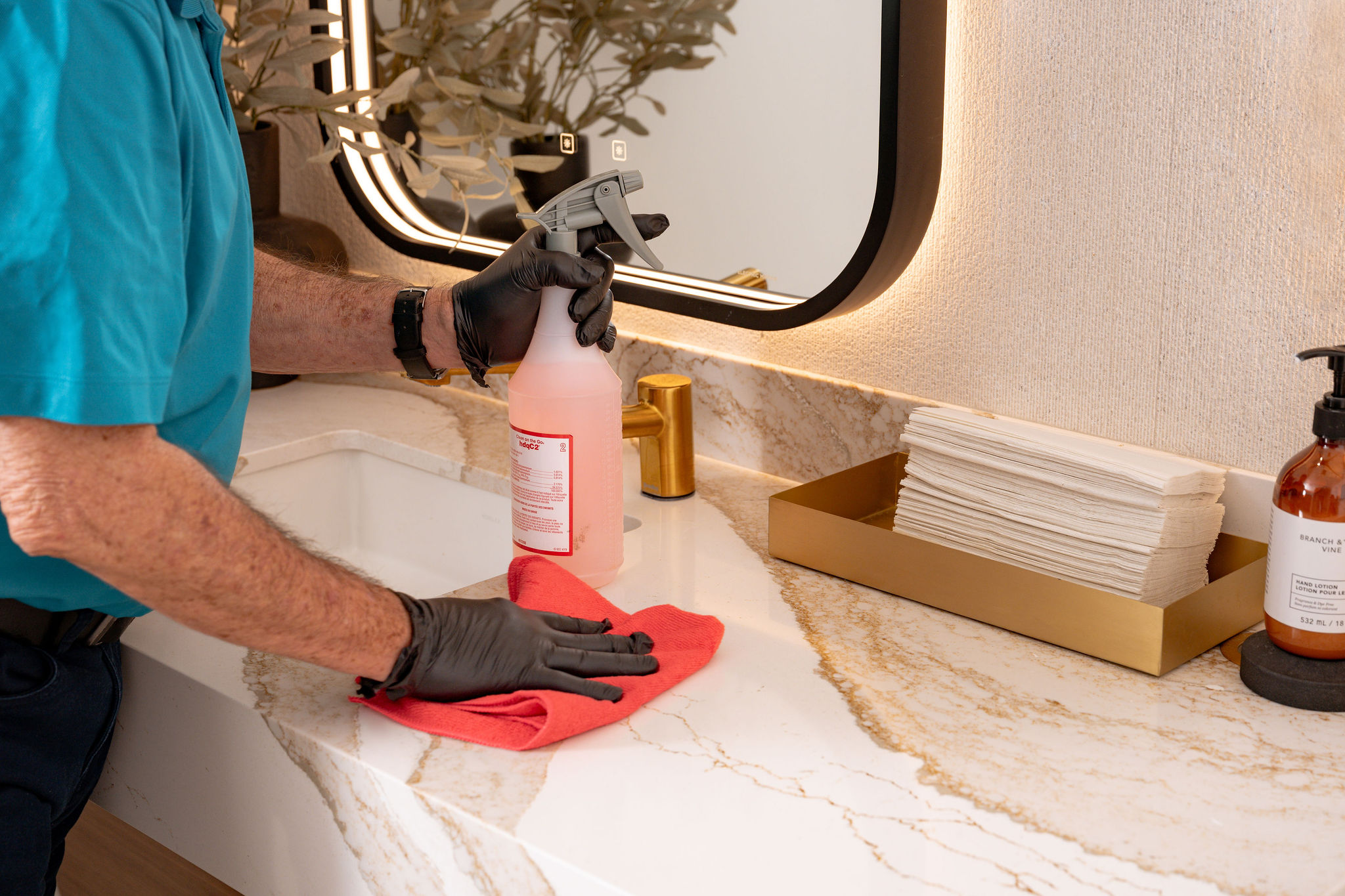
- Using appropriate, low-toxicity products that don’t leave chemical residues
A Gitnux survey found that 70% of consumers have concerns about the chemicals used in cleaning products — a growing reason why luxury properties are shifting toward eco-friendly, certified cleaning solutions that protect both residents and premium interior finishes.
Seasonal Factors in Phoenix
Properties in Phoenix operate in a unique environment. Dust, intense heat, and seasonal changes accelerate how quickly shared spaces deteriorate between cleanings.
Seasonal cleaning adjustments for Phoenix properties:
- Increased entryway attention during high-dust periods
- More frequent cleaning of glass and exterior-facing surfaces
- Managing debris tracked in from outdoor areas and pool decks
- Preparing common spaces ahead of peak seasonal usage periods
These adjustments are built into proactive facility strategies — ensuring consistent standards year-round rather than catching up after conditions have already affected the resident experience.
Maintaining Consistency Without Disrupting Residents
In residential environments, cleanliness must be maintained without interrupting daily routines. This is where professional scheduling and coordination become critical.
How professional services manage this:
- Staggered cleaning schedules aligned to low-traffic windows
- Quiet, low-disruption commercial equipment
- Defined cleaning scopes for each area with documented accountability
- Direct coordination with on-site management teams
Consistency matters more than intensity. Regular, structured attention keeps spaces in condition — eliminating the need for disruptive deep resets that signal a lapse in standards rather than a maintenance of them.
The apartment cleaning services market reflects how seriously the industry is taking this. It is projected to reach $37.8 billion by 2029 — driven by rising resident expectations and the growing recognition that professional cleaning is a baseline requirement in premium residential communities, not an optional service.
Final Thoughts
Luxury apartment living sets a high bar — and every shared touchpoint either reinforces or erodes that standard. From first impressions in the lobby to the daily experience of hallways, elevators, and amenity spaces, consistent professional luxury apartment cleaning services are what make that standard sustainable.
Properties that invest in structured, professional common area cleaning protect their resident relationships, support leasing performance, and maintain the asset value that defines a truly high-end community.

Joshua Woodworth is the CEO of Oranje Commercial Janitorial in Phoenix, AZ, bringing over 15 years of experience in facilities management with a focus on large custodial operations in government, Class-A, multi-tenant, multi-site, and K-12/higher education settings. A graduate of the University of Wisconsin-Platteville, he has overseen multi-million-dollar accounts and managed sites exceeding 10 million square feet, including athletic, academic, administrative, research, and residential facilities. Known for his expertise in custodial transitions and relationship management, he places a strong emphasis on developing long-term partnerships, which is reflected in his daily approach to work. Outside of work, Joshua enjoys volunteering in youth sports, traveling with his family, and exploring new ways to elevate the cleaning industry.