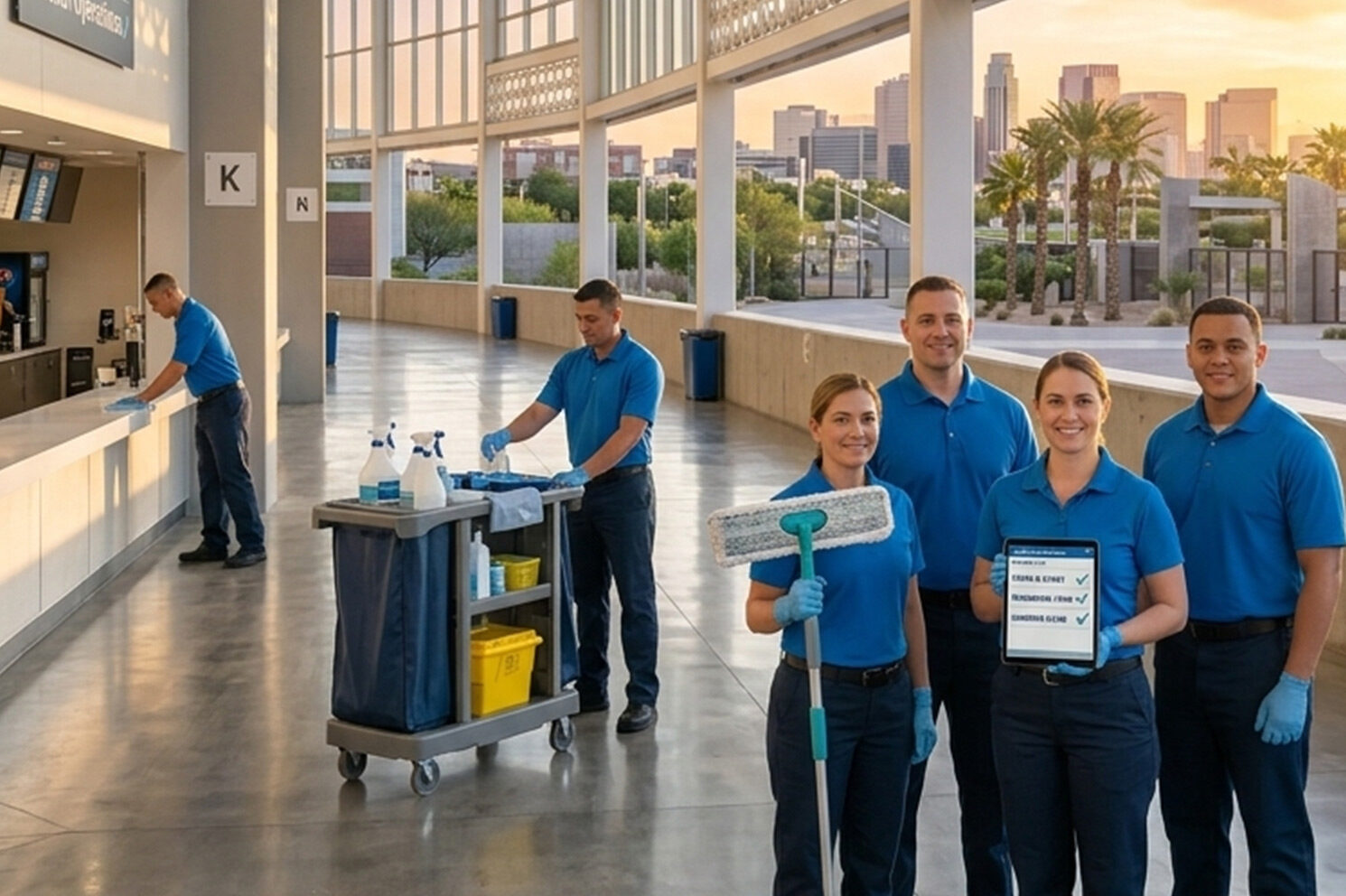
A sold-out game or concert creates a few hours of energy that 50,000 people will remember. What most of them won’t see is the operation that makes it possible — the cleaning crew that moves in the moment the last fan leaves, and the systems that kept the venue functional while the crowd was still inside.
Stadium and arena cleaning isn’t a scaled-up version of regular commercial cleaning. It’s a different discipline entirely — driven by compressed timelines, massive crowd volumes, and zero margin for error when the next event is 24 hours away. This guide breaks down how it actually works, from entry gates to post-event sanitation, and what venue operators and facility managers need to have in place.
Why Cleanliness Drives Fan Experience More Than Most Venues Admit
The connection between cleanliness and fan satisfaction isn’t anecdotal. A study by Nationwide Waste Service analyzed more than 200,000 fan reviews across all 30 NFL stadiums and found that restroom quality — covering cleanliness, availability, wait times, and accessibility — was one of the most frequently cited factors in overall game-day satisfaction.
Stadiums and arenas are communal spaces where thousands of people gather to share unforgettable moments. With large crowds comes a heightened need for cleanliness and hygiene — and keeping fans returning requires maintaining a clean environment consistently, not just on inspection days.
The reputational stakes are real. A venue that earns consistent complaints about dirty restrooms, overflowing concession areas, or sticky floors isn’t just frustrating fans — it’s creating a pattern that shows up in reviews and eventually affects ticket demand. For Phoenix venues hosting back-to-back events across sports seasons and concert runs, that compounding effect is something no operator can afford to ignore.
Before the Doors Open: Pre-Event Setup Is Where Standards Are Set
The cleaning operation that shapes how a venue looks when fans walk in begins hours — sometimes days — before the event. Pre-event services include everything from pressure washing entryways to detailing VIP lounges — signage is wiped down, waste bins are emptied, seating is disinfected, floors are polished, and concession stands are deep cleaned.
Pre-event cleaning priorities:
- Entry gates and exterior plazas — The first impression of any venue. Walkways should be free of debris and staining, with waste receptacles freshly lined and positioned for crowd flow. Pressure washing concrete walkways, entry ramps, and gate areas removes embedded grime that sweeping alone can’t address.
- Concourse floors — Hard surface concourses need to be swept, scrubbed, and fully dried before doors open. Wet or sticky floors at arrival create an immediate negative impression and a slip liability.
- Restroom reset — Every restroom should be stocked, disinfected, and ready well before the first guest arrives. Supplies running low 30 minutes into doors-open is a failure that traces back to pre-event preparation.
- Seating bowl inspection — Seats and cup holders from the previous event need to be wiped down, spot-cleaned, and confirmed free of gum, residue, and leftover debris.
- Concession and food service areas — Food-contact surfaces require full sanitation before any food prep begins.
Having day porter staff in place from the moment crew access opens allows managers to address issues as they appear rather than scrambling in the final hour before gates open.
During the Event: Continuous Coverage Is Non-Negotiable
Once fans are inside, the cleaning operation shifts into real-time response mode. This is where most venue cleaning programs either hold up or break down.
A well-thought-out cleaning plan should include a detailed schedule for pre-event, during-event, and post-event cleaning routines — including cleaning frequency for different areas and the specific products appropriate for each zone.
What active event coverage looks like in practice:
- Restroom staffing — Attendants stationed at high-traffic restrooms throughout the event, performing hourly disinfection of door handles, stall latches, faucets, and dispensers, and restocking supplies continuously before they run out.
- Concourse patrol loops — Designated crew rotating through concourse areas on a set schedule, collecting litter from seating aisles, addressing spills before they become hazards, and monitoring waste bins to swap liners before overflow occurs.
- Concession area monitoring — Food and beverage zones generate grease, spillage, and food debris throughout the event. These areas need ongoing surface wipes and floor spot-mopping between rushes, not just at halftime.
- High-touch surface disinfection — Handrails, elevator buttons, entry door handles, concession counters, and payment kiosks should be wiped on a rotation every 30 to 60 minutes during peak attendance.
- Spill and incident response — Every large venue needs a defined spill response protocol with staged equipment and assigned staff — not a reactive scramble when something happens in Section 114 at the start of the third quarter.
For venues running concurrent events or multi-use spaces — like Phoenix facilities that shift from a sports event to a concert setup within 48 hours — this real-time infrastructure is what separates venues that execute smoothly from those that are always catching up.
Restrooms: The Make-or-Break Zone
Restrooms get more direct criticism from fans than almost any other part of a venue — and they deserve more attention than most cleaning programs give them.
A study of NFL stadium restrooms found that cleanliness, availability, and supply stocking were the three factors fans mentioned most when rating their restroom experience — and that even small improvements in these areas had measurable effects on overall fan satisfaction scores.
What a properly staffed and maintained restroom program includes:
- Restroom attendants during the event with access to all supplies they need without having to leave the zone
- Hourly cleaning of all fixture contact points — stall latches, flush handles, faucets, and soap dispensers
- Continuous supply monitoring — toilet tissue, paper towels, hand soap, and feminine hygiene products restocked before dispensers empty
- Odor control through enzymatic drain treatment and appropriate air care products, not masking sprays
- Immediate response to clogged fixtures or floor spills with biohazard protocol when applicable
The restroom experience is one of the few times during an event that a fan has a direct, personal interaction with your facility’s maintenance standards. Getting it wrong is more memorable than getting it right.
For more on how structured restroom cleaning programs work in high-traffic commercial settings, see Oranje’s guide to restroom cleaning for Phoenix facilities.
Concession Areas: Food Safety Meets High Volume
Concession and food service areas present a cleaning challenge that goes beyond appearance. Grease accumulation, sugar residue, protein soils, and food debris on floors create slip hazards, odor problems, pest attractants, and health inspection risks — all at the same time.
During-event concession cleaning priorities:
- Surface wipe-downs of counters and food-contact areas between serving rushes
- Floor spot-mopping in high-spillage zones
- Drain monitoring and treatment to prevent odor migration
- Waste bin monitoring with liner swaps before overflow
Post-event concession deep cleaning:
- Full degreasing of all floors using heavy-duty degreasers and commercial scrubbers
- Sanitization of all food-contact surfaces with food-safe products at appropriate dwell times
- Stainless steel polishing of equipment exteriors
- Drain cleaning with enzyme treatment
- Complete trash removal from all stations
This is also an area where commercial floor cleaning matters beyond just appearance. Grease-saturated floors in concession areas that aren’t properly degreased become progressively harder to clean and increasingly slippery — a liability that compounds over a season if not addressed after every event.
The Post-Event Reset: Where the Next Event Is Won or Lost
The moment the last fan exits, the clock starts on the next event. The turnover window — from overnight reset through early-morning prep and all the way through live event maintenance — determines whether a venue feels world-class or worn down. For Phoenix venues with tight event schedules, that window is often 18 to 24 hours.
Post-event reset sequence:
Immediately (0–60 minutes post-event):
- Deploy trash teams to all exit routes, concourses, and exterior plazas before litter gets tracked back inside
- Stabilize restrooms — remove all waste, spot-clean floors and fixtures, and address any immediate hazards
- Begin seating bowl trash removal working top-down through each section
Within 2–8 hours:
- Full restroom recovery clean — top-to-bottom disinfection, floor scrubbing, fixture sanitization, complete supply restock
- Concourse floor restoration — dry sweep, machine scrub, and dry
- Deep concession area reset — degrease, sanitize, drain treatment, complete restock
- Seating bowl deep clean — seat wipe-downs, cup holder disinfection, handrail cleaning, concrete deck pressure washing
Before next event opens:
- Supervisor walkthrough inspection covering every zone with documented scoring
- High-visibility surface polish — glass, entry doors, handrails, elevator panels
- Final restroom reset with full supply verification
- All trash receptacles relined and staged
The exterior of the venue follows the same protocol. Entry gate surfaces, plaza walkways, and any exterior glass need to be addressed as part of every post-event cleanup — not just periodically. Exterior pressure washing of concrete plaza areas and entrance ramps after events removes embedded food residue, drink spills, and gum that accumulate quickly under heavy foot traffic.
Phoenix-Specific Considerations for Large Venue Cleaning
Phoenix venues operate in conditions that add complexity to large-scale cleaning programs. Desert dust accumulates on outdoor plaza surfaces, entry areas, and glass facades faster than in most other markets — particularly during spring and early summer. Events held during the hotter months also mean concession areas, restrooms, and enclosed concourses carry odor and bacteria buildup more aggressively than cooler conditions allow.
Phoenix-specific adjustments that matter:
- Increased frequency on exterior glass and entry gate cleaning during high-dust periods
- More aggressive floor scrubbing protocols in concourses where tracked-in dust mixes with food spills
- Odor management protocols scaled up during warm-weather events when restrooms and concession areas heat up between event sessions
- Carpet extraction and spot treatment in carpeted club areas and premium lounges after every event, not sea/sonally
If your venue has carpeted hospitality or club level areas, those spaces require attention after every event — not just periodically. Commercial carpet extraction removes embedded food soils, beverage spills, and odor from carpet fibers that regular vacuuming leaves behind.
For how seasonal conditions in Phoenix affect commercial facility maintenance more broadly, see Oranje’s guide to seasonal commercial property cleaning.
Staffing and Coordination: The Operational Layer Most Venues Underestimate
Even the best cleaning plan fails without the right staffing structure behind it. Large venues require a crew model built around zone ownership — where every section of the building has an assigned lead accountable for results, not just completion of tasks.
Real-time support teams are strategically placed across the arena to manage overflow trash, restock supplies, address spills, and report maintenance issues on the spot — coordinating via radio to ensure smooth guest flow across the full facility.
What effective stadium cleaning staffing looks like:
- Zone leads assigned to specific areas of the venue with documented responsibility
- Dedicated restroom attendants during events — not shared with other duties
- A separate concourse patrol team running continuous loops
- Spill response team with staged equipment and defined response protocols
- Supervisor conducting live inspections and redirecting resources as needed
This is distinct from general janitorial staffing. The pace, coordination, and decision-making required during a live event require experienced staff who know the venue, understand crowd flow, and can operate without constant direction.
For a broader look at how janitorial staffing and accountability structures work in large facilities, see Oranje’s complete guide to janitorial services in Phoenix.
Quality Control: Inspections That Actually Catch Problems
Post-event inspections are only useful if they’re structured. A supervisor walking through and giving general approval doesn’t catch the missed areas under suite seating, the restroom drain that wasn’t treated, or the concession floor that was mopped but not degreased.
What a structured venue inspection covers:
- Floor condition in all zones — sticky residue, debris, wet areas
- All restroom surfaces, supply levels, and odor status
- Concession area compliance — food-contact surface sanitation, floor degreasing, drain treatment
- Seating bowl — seat condition, cup holders, handrails, aisle floors
- Exterior plazas and entry gates
- Suite and premium area reset quality
- Equipment cleaning and storage
Documented inspection scoring with photo evidence creates accountability and builds the data needed to continuously improve performance across events. This is closely tied to how cleaning quality audits work in practice for Phoenix facilities — and why venues that implement formal audit processes report fewer event-day complaints.
Final Thought
Running a stadium or arena clean isn’t just logistics — it’s the operational infrastructure that determines whether fans leave with a positive memory or a complaint they share online. Every zone, every event phase, and every staffing decision either supports or undermines that outcome.
If you manage a Phoenix venue or large event facility and want to understand what a fully structured cleaning program looks like from pre-event through post-event reset, Oranje works with large facilities across the Valley to build and execute programs that hold up under real event conditions — not just on paper.

Joshua Woodworth is the CEO of Oranje Commercial Janitorial in Phoenix, AZ, bringing over 15 years of experience in facilities management with a focus on large custodial operations in government, Class-A, multi-tenant, multi-site, and K-12/higher education settings. A graduate of the University of Wisconsin-Platteville, he has overseen multi-million-dollar accounts and managed sites exceeding 10 million square feet, including athletic, academic, administrative, research, and residential facilities. Known for his expertise in custodial transitions and relationship management, he places a strong emphasis on developing long-term partnerships, which is reflected in his daily approach to work. Outside of work, Joshua enjoys volunteering in youth sports, traveling with his family, and exploring new ways to elevate the cleaning industry.