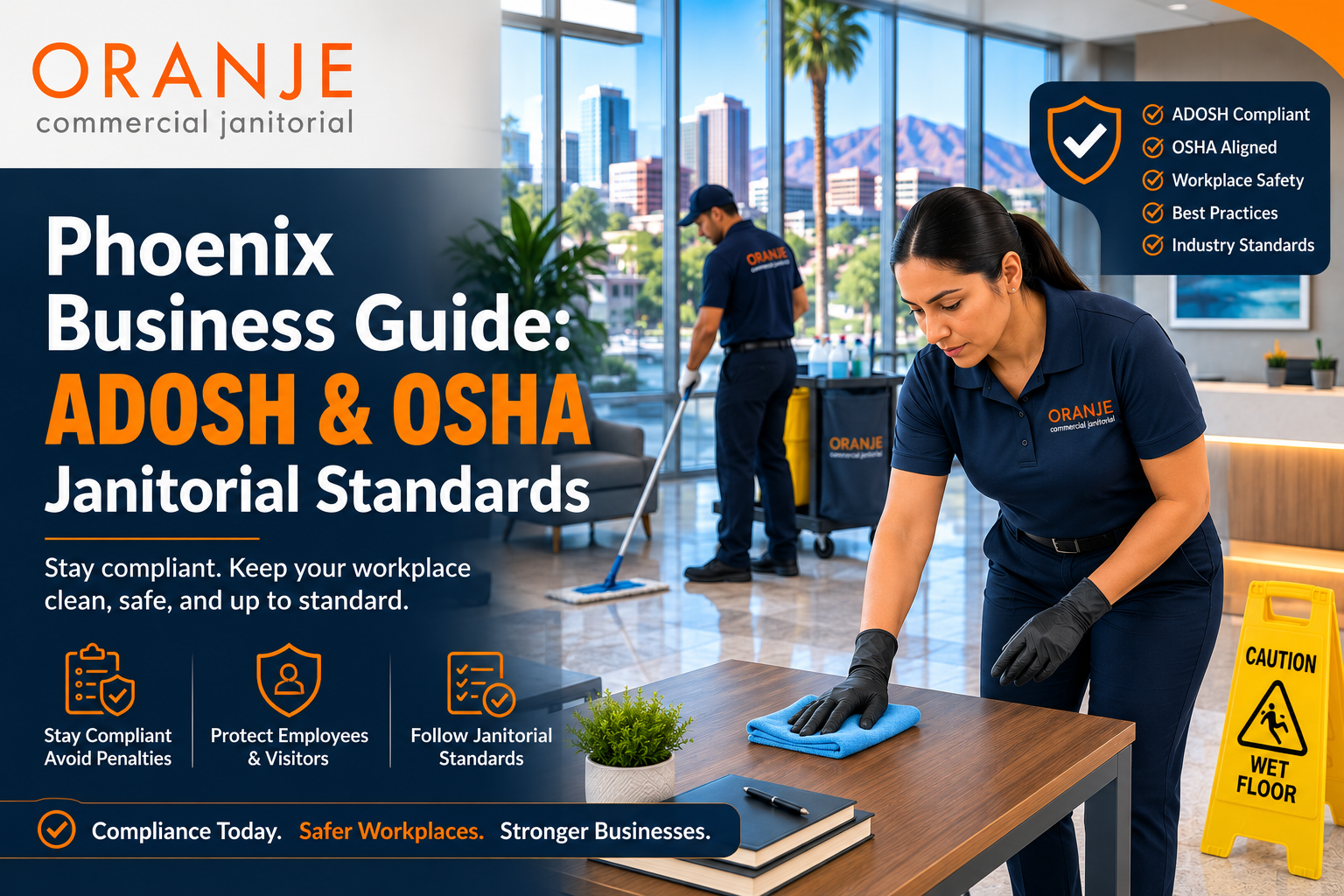
Commercial cleaning is usually seen as a building maintenance task. But for Phoenix businesses, it also connects directly to workplace safety.
Slippery floors, blocked walkways, poorly stored cleaning products, dusty work areas, and neglected restrooms are not just appearance issues. In the wrong setting, they can become safety concerns for employees, tenants, visitors, vendors, and cleaning crews.
That is why janitorial work should not be treated as a loose checklist. It needs to support the way the property operates, the type of work being done, and the safety expectations that apply to the space.
This guide is not legal advice. It is a practical look at how commercial cleaning fits into ADOSH and OSHA-related workplace expectations for Phoenix businesses in 2026.
Why Cleaning Standards Matter for Phoenix Businesses
Phoenix businesses deal with a few cleaning challenges that are easy to underestimate.
Dust gets tracked into buildings quickly. Heat increases restroom and odor concerns. Commercial floors take heavy wear from employees, customers, carts, deliveries, and foot traffic. Industrial and warehouse spaces may also deal with debris, residue, and high-use loading areas.
In these environments, cleaning plays a practical role in keeping the workplace organized and usable.
For a property manager, office manager, plant supervisor, or facility lead, the main concern is not whether the building “looks clean” at first glance. The bigger concern is whether the building is being maintained in a way that helps reduce preventable risks.
That includes clear walkways, clean restrooms, properly managed cleaning products, safe floor conditions, and a cleaning routine that supports daily operations.
ADOSH, OSHA, and the Role of Janitorial Work
OSHA sets workplace safety and health standards at the federal level. Arizona also has ADOSH, which oversees occupational safety and health within the state.
For cleaning teams and facility managers, this matters because janitorial work often touches the same areas that safety teams care about.
Examples include:
- Floors and walking paths
- Restrooms and handwashing areas
- Cleaning product storage and labeling
- Trash rooms and designated collection points
- Breakrooms and shared spaces
- Entryways, stairs, and common corridors
- Equipment-adjacent areas in industrial spaces
Cleaning does not replace a company’s safety program. It supports it.
A cleaning company cannot guarantee compliance for a business. But a consistent janitorial process can help keep common workplace conditions under better control.
That is where Phoenix businesses often benefit from janitorial routines for busy commercial buildings, especially when the space has steady traffic throughout the day.
Floor Conditions and Walking Surfaces
One of the most practical cleaning-related safety issues is floor condition.
Wet floors, dust buildup, spills, loose debris, and tracked-in dirt can all create problems. In offices, this may show up near entrances, coffee stations, restrooms, and hallways. In warehouses or manufacturing spaces, it may happen around dock areas, production zones, storage aisles, or breakrooms.
The cleaning process should answer a few basic questions:
- Who responds to spills?
- How quickly are wet areas marked and addressed?
- Are floors cleaned at times that reduce disruption?
- Are entrances maintained during dusty or rainy conditions?
- Are high-traffic walkways checked during the day?
For many buildings, daily mopping is not enough. Floors may need spot cleaning, scheduled machine work, mat care, or more frequent checks during busy hours.
In Phoenix, exterior dust also matters. If entrances and walkways are not kept under control, that debris moves inside. That is why safer floor maintenance for high-traffic walkways should be part of the cleaning plan, not something handled only when floors start looking bad.
Restroom Sanitation and Shared Areas
Restrooms are one of the first places where cleaning problems become complaints.
In a workplace setting, they also affect hygiene, employee comfort, and visitor perception. A restroom that is cleaned once but ignored for the rest of the day may not hold up in a busy commercial building.
A practical restroom plan should include:
- Regular fixture cleaning
- Restocking paper products and soap
- Odor checks
- Floor cleaning
- Touchpoint wiping
- Trash removal to the property’s designated collection area
- Reporting leaks, damage, or recurring issues
For high-use buildings, restrooms may need multiple checks per day. This is especially true in office buildings, schools, clinics, retail centers, event spaces, and industrial facilities with shift changes.
The same idea applies to breakrooms, conference rooms, shared kitchens, waiting areas, and employee lounges. These areas need steady attention because they are used by many people, often throughout the day.
For properties with heavier traffic, daytime restroom and lobby checks can help catch small issues before they become tenant or employee complaints.
Chemical Use, Labeling, and Storage
Cleaning products must be handled with care.
That means using products as intended, following label instructions, storing them properly, and making sure cleaning staff understand what they are using. Businesses should also have clear expectations around chemical access, storage areas, and safety data information.
This is especially important in facilities where employees, tenants, patients, students, or production workers may be nearby while cleaning is taking place.
A few practical steps help reduce confusion:
- Keep cleaning products in approved storage areas
- Avoid unlabeled secondary bottles
- Train cleaning staff on site expectations
- Separate incompatible products
- Use the right product for the surface and setting
- Document special product requirements when needed
This does not need to be complicated, but it does need to be controlled. Guesswork around chemicals is where avoidable problems usually start.
Trash Rooms, Bins, and Collection Areas
Internal waste handling is another part of facility cleaning that affects building conditions.
Oranje does not need to haul waste offsite to support this process. But cleaning teams can help manage internal trash removal, move waste to designated collection areas, and clean the spaces around bins, dumpsters, compactors, and trash rooms.
For Phoenix commercial properties, these areas can become dirty quickly, especially during hot months. Odor, spills, loose debris, and residue around containers can affect both cleanliness and pest pressure.
A good cleaning routine may include:
- Removing trash from interior bins
- Moving sealed bags to assigned collection areas
- Wiping exterior bin surfaces when needed
- Cleaning floors around trash rooms
- Reporting leaks or damaged containers
- Pressure washing surrounding exterior areas when scheduled
The important point is safety. Cleaning staff should not dig through containers or sort through waste. The focus should stay on the surrounding surfaces, access areas, and proper movement of sealed trash to the designated location.
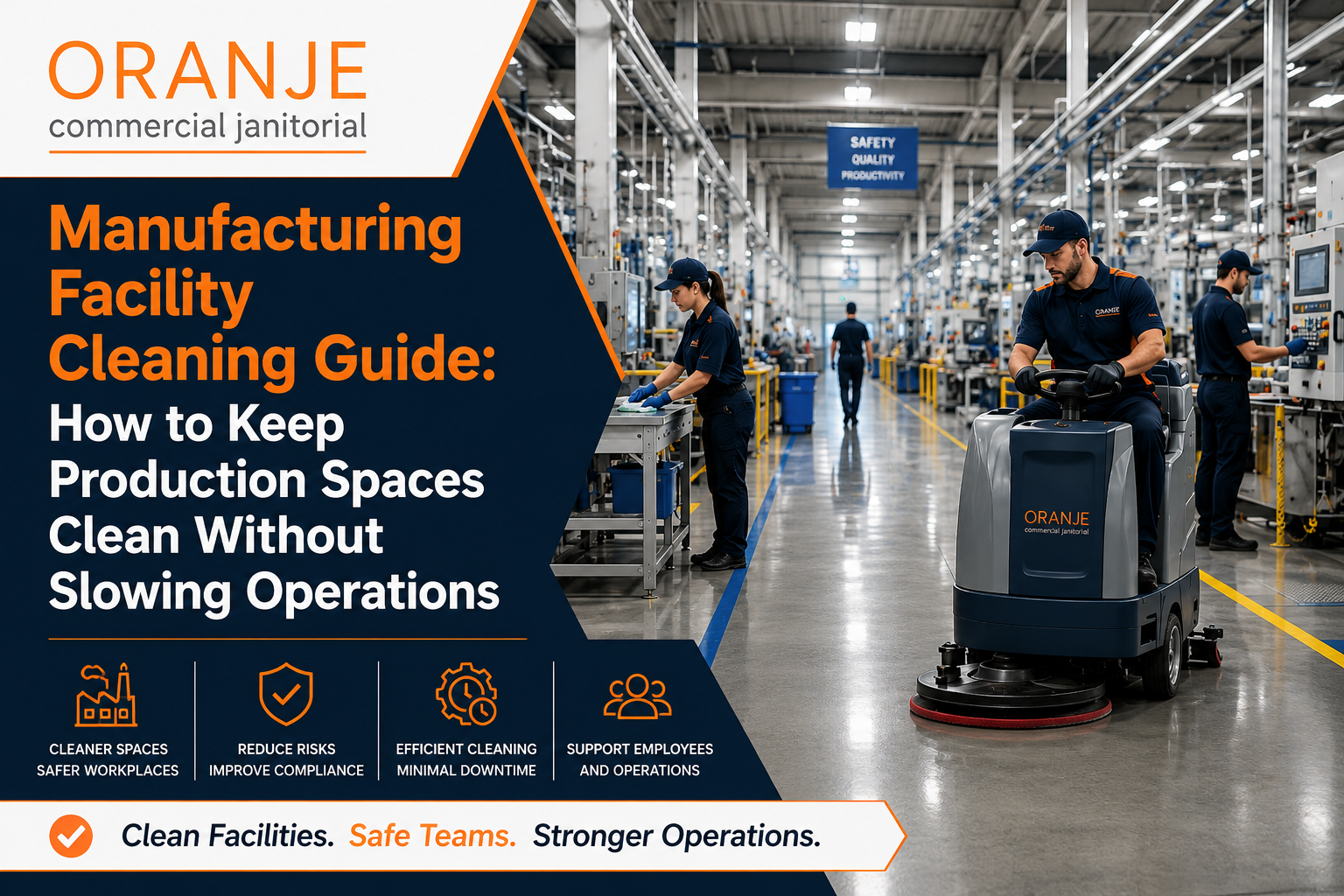
Industrial, Warehouse, and Equipment-Area Cleaning
Commercial cleaning compliance in Phoenix looks different depending on the facility type.
An office building may focus on restrooms, floors, lobbies, and shared spaces. A manufacturing site or warehouse may need more attention around dock doors, production support areas, dust-prone zones, equipment-adjacent floors, and employee locker rooms.
Cleaning near equipment requires clear boundaries. Cleaning teams should know what they can clean, what they should not touch, and when access is allowed.
For example:
- Floors around equipment may be swept or scrubbed during approved windows
- Exterior surfaces may be wiped if included in the scope
- Walkways may be cleared of dust or debris
- Breakrooms and locker rooms may be cleaned between shifts
- Loading zones may be cleaned around delivery schedules
Cleaning teams should not move parts, open equipment panels, or interfere with active production. That kind of clarity protects both the cleaning crew and the business.
For industrial properties, it helps to connect cleaning plans with dust control in production support zones, especially where foot traffic and equipment movement overlap.
Inspection Notes and Documentation
A cleaning task that is not documented can be hard to verify later.
This does not mean every small task needs a long report. But facility managers should have some way to track work, issues, and follow-up items.
Useful documentation may include:
- Cleaning checklists by area
- Restroom service logs
- Floor care schedules
- Cleaning product storage notes
- Supervisor walkthrough forms
- Issue reports for spills, damage, or recurring problems
- Communication notes between shifts
This type of recordkeeping helps everyone stay aligned. It also gives managers a better view of patterns.
If a restroom complaint happens every Tuesday afternoon, the schedule may need adjustment. If an entrance floor gets dirty after deliveries, that area may need an added check. If an employee breakroom gets heavy use during a second shift, the cleaning frequency may need to change.
Documentation turns cleaning from a guessing game into a manageable process.
Coordinating Cleaning With Other Facility Services
Janitorial work is only one part of facility upkeep.
Many businesses need cleaning support that changes by season, occupancy, or building activity. A property may need daily cleaning, but also periodic floor care, disinfection, pressure washing, carpet cleaning, or post-construction cleanup.
For example, an office may need disinfecting shared touchpoints after heavy use during flu season or after large meetings. A retail property may need entrance cleaning after dust storms. A warehouse may need floor work scheduled outside active forklift traffic. A building that just completed renovations may need detailed cleanup before employees or tenants return.
This is also why internal coordination matters when selecting a vendor. Readers managing larger facilities may also need guidance on how facility teams choose the right cleaning contractor, especially when safety, documentation, and consistency are part of the decision.
Planning Cleaning Frequency for 2026
Cleaning frequency should match actual building use.
A low-traffic professional office does not need the same schedule as a medical clinic, school, warehouse, or event venue. A facility with one daytime shift does not need the same plan as a property used by multiple shifts or weekend crews.
A practical cleaning plan should consider:
- Number of employees or occupants
- Visitor traffic
- Restroom usage
- Floor type and floor wear
- Dust exposure
- Delivery activity
- Shared space usage
- Seasonal changes
- Special safety requirements
Phoenix businesses should also review cleaning needs before summer heat, monsoon dust, peak operating seasons, or major occupancy changes.
This same planning mindset connects with what seasonal cleaning changes inside Phoenix buildings, because the right cleaning plan in January may not be enough in July.
Best Practices for Businesses Reviewing Their Janitorial Plan
Businesses do not need to overcomplicate this. A few practical habits make cleaning easier to manage.
Walk the Building With Fresh Eyes
Do not only inspect the front entrance. Walk restrooms, back hallways, breakrooms, storage areas, stairwells, dock zones, and exterior collection areas.
Match Tasks to Risk and Usage
High-traffic areas need more frequent attention. Low-use rooms may need less. Cleaning should follow how the building is actually used.
Keep Cleaning Scope Clear
The cleaning provider and facility contact should both know what is included, what is excluded, and what requires approval.
Review Cleaning Product Storage
Make sure products are stored properly, labeled correctly, and not left in unsecured or inappropriate areas.
Track Recurring Issues
If the same complaint keeps coming up, the issue may be schedule, access, staffing, product choice, or communication.
Plan After Construction or Renovation Work
Dust and debris after repairs or buildouts can affect the rest of the building. Businesses should schedule cleanup before regular use resumes. This is where preparing occupied spaces after renovation work becomes part of safe and practical facility turnover.
Final Thoughts
ADOSH and OSHA-related cleaning expectations are not about making a building look perfect. They are about keeping the workplace orderly, sanitary, and safer to use.
For Phoenix businesses, that means paying attention to floors, restrooms, shared areas, cleaning product handling, dust, trash rooms, and communication between cleaning teams and facility managers.
A good janitorial program does not replace workplace safety management. But it does support it every day.
Oranje’s commercial cleaning services are built around that practical reality. From routine janitorial cleaning and day porter support to floor care, office cleaning, pressure washing, carpet cleaning, and post-construction cleanup, the goal is to help businesses maintain cleaner, more controlled spaces without disrupting daily operations.
In 2026, the businesses that manage cleaning well will not be the ones doing the most random tasks. They will be the ones with clear routines, documented expectations, and cleaning support that matches how their facility actually works.

Joshua Woodworth is the CEO of Oranje Commercial Janitorial in Phoenix, AZ, bringing over 15 years of experience in facilities management with a focus on large custodial operations in government, Class-A, multi-tenant, multi-site, and K-12/higher education settings. A graduate of the University of Wisconsin-Platteville, he has overseen multi-million-dollar accounts and managed sites exceeding 10 million square feet, including athletic, academic, administrative, research, and residential facilities. Known for his expertise in custodial transitions and relationship management, he places a strong emphasis on developing long-term partnerships, which is reflected in his daily approach to work. Outside of work, Joshua enjoys volunteering in youth sports, traveling with his family, and exploring new ways to elevate the cleaning industry.