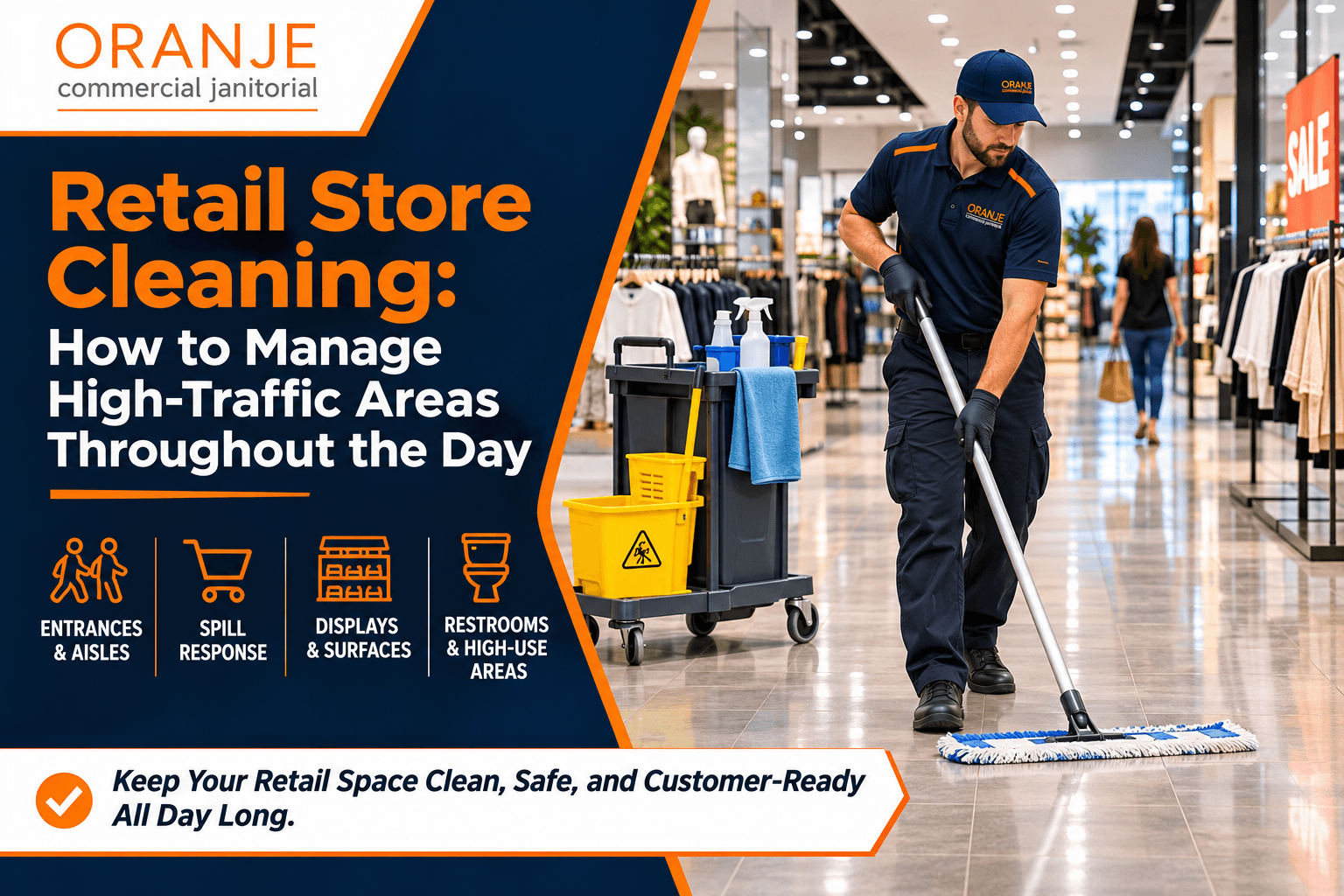
Retail stores get dirty in a different way than offices.
Customers are constantly moving through entrances, aisles, fitting rooms, checkout areas, and restrooms. Shopping carts track in dust. Displays get touched. Spills happen without warning. During busy periods, a floor that looked fine at opening can need attention again before lunch.
That is why cleaning a retail environment is less about one big end-of-day reset and more about keeping the store under control throughout operating hours.
For Phoenix retailers, the challenge is even more noticeable. Dust, parking-lot debris, dry conditions, and heavy foot traffic can quickly work their way from the storefront into the rest of the sales floor.
The practical question is not, “How often should the whole store be cleaned?” It is, “Which areas need attention first, and how often should they be checked?”
Why Retail Cleaning Needs a Different Routine
A store can be clean at 8 a.m. and look very different by 2 p.m.
Retail cleaning has to follow customer movement. Entrances, checkout areas, restrooms, fitting rooms, and main aisles usually need more attention than low-traffic corners or back-office areas.
That means cleaning schedules should not treat every part of the store the same.
A useful approach is to divide the property into three groups:
- Areas that need checking several times per day
- Areas that need routine daily cleaning
- Areas that can be handled during scheduled deep cleaning
For retailers that need a broader service plan around store hours and customer traffic, Oranje’s cleaning support for active retail environments covers the commercial service side in more detail.
This article focuses on what store managers should actually watch during the day.
Start at the Entrance
The entrance usually tells you what the rest of the store will look like later.
Dirt, dust, moisture, gum, and small debris collect around doors and vestibules first. Once customers step through it, that soil travels further inside.
Entry mats help, but only when they are maintained.
A mat that is overloaded with dirt stops trapping much of anything. It may need vacuuming, shaking, extraction, or replacement depending on the material and traffic level.
Store managers should also check:
- Glass doors for fingerprints and smudges
- Thresholds for tracked-in debris
- Corners where dust settles
- Mats that have shifted or curled
- Exterior walkways immediately outside the entrance
In Phoenix, storefront glass can also show dust and spotting quickly. Periodic glass care around customer-facing entrances helps keep the front of the store from looking neglected even when the interior is being maintained.
Watch the Main Traffic Lanes
Retail floors take constant abuse.
Carts, shoes, deliveries, strollers, and repeated foot traffic all concentrate wear in the same areas. Main aisles, checkout lanes, fitting room approaches, and entrances usually show the first signs.
Routine mopping handles surface soil, but that does not mean every floor problem should be treated the same way.
Tile, VCT, LVT, sealed concrete, stone, and other surfaces all need different maintenance over time.
Daily cleaning may include:
- Sweeping or dust mopping
- Spot mopping spills
- Removing scuff marks
- Checking aisle edges
- Keeping corners free of buildup
Then, on a scheduled basis, stores may need machine scrubbing, burnishing, grout care, or finish maintenance.
For stores with heavy daily traffic, scheduled care for worn retail flooring helps deal with buildup that routine mopping cannot fully remove.
Keep Spill Response Simple
Spills are one of the few retail cleaning issues that cannot wait until the next scheduled round.
The priority should be simple:
Identify it, secure the area, clean it, and make sure the surface is safe before reopening the space.
Retail teams should know who handles a spill when it happens. If responsibility is unclear, small problems sit longer than they should.
The cleaning team and store staff also need a basic communication process. That may be as simple as a radio call, service log, or designated contact.
This becomes more important in grocery, convenience, and high-volume stores where spills are frequent.
For stores reviewing the safety side of floor maintenance, Oranje’s discussion of cleaning practices that support safer workplaces explains why floor conditions, walkways, and response routines matter beyond appearance.
Displays Need Cleaning Without Disrupting Merchandising
Display areas are easy to overlook because they are part of the sales environment rather than obvious cleaning zones.
But shelves, display ledges, mirrors, product stands, and glass cases collect dust and fingerprints quickly.
The challenge is knowing what cleaning teams should and should not touch.
Merchandise should generally be handled according to the retailer’s own procedures. Cleaning crews should have clear instructions about which surfaces can be wiped, which displays require staff approval, and where sensitive products are located.
This is especially important in:
- Cosmetics stores
- Jewelry shops
- Electronics retailers
- Furniture showrooms
- Luxury retail
- Specialty stores
Clear boundaries help avoid accidental movement or damage while still keeping the display area presentable.
Restrooms Cannot Run on an End-of-Day Schedule
If customers use the restroom throughout the day, cleaning it only once is usually not enough.
Restrooms are one of the areas where shoppers notice problems immediately.
A daytime check does not always mean a full clean. It may simply involve:
- Checking soap and paper supplies
- Wiping counters
- Removing visible soil
- Spot mopping
- Emptying interior bins when needed
- Checking odors
- Reporting leaks or maintenance problems
The busiest times will vary by store.
A mall retailer may see heavier use on weekends. A grocery store may have steady traffic all day. A store near offices may experience peaks around lunch and after work.
The cleaning frequency should follow actual usage rather than a fixed habit.
Checkout Areas Need Frequent Light Attention
Checkout counters are touched constantly.
Customers place products, phones, bags, and personal belongings on them throughout the day. Employees also share registers, scanners, and surrounding surfaces.
These areas usually benefit from frequent light cleaning rather than occasional heavy cleaning.
The same applies to:
- Self-checkout stations
- Shopping baskets
- Cart handles
- Customer service counters
- Door handles
- Fitting room handles
The goal is not to repeatedly deep-clean every surface. It is to prevent visible buildup and keep frequently handled areas from being ignored.
Carpeted Areas Need a Different Plan
Some retailers use carpet in fitting rooms, sales areas, offices, showrooms, or entrance zones.
Vacuuming is the daily task, but heavy traffic eventually pushes soil deeper into the carpet.
That is when extraction becomes necessary.
Stores should pay particular attention to dark traffic lanes near entrances, counters, and main walking paths.
Periodic deeper cleaning for carpeted customer areas can be scheduled around store hours so drying does not interfere with shoppers.
The important point is to avoid waiting until the carpet looks badly worn before acting.
Shopping Centers Need Coordination Beyond One Store
Cleaning becomes more complicated in shopping centers because individual stores do not control every customer-facing area.
A store may maintain its own sales floor, while the property manager handles exterior sidewalks, common corridors, shared restrooms, and parking areas.
That means communication matters.
A problem outside the storefront can still affect the customer’s perception of the business.
Retailers operating inside managed properties may find Oranje’s article on setting clearer cleaning standards across shared properties useful when responsibilities are split between tenants, management, and outside vendors.
Do Not Ignore the Exterior
A clean store with a dirty entrance still feels dirty.
Gum, grease, spills, dust, and stains around sidewalks or storefront approaches can build up quickly in high-traffic shopping areas.
These areas do not need pressure washing every day, but they should be part of the maintenance plan.
Periodic washing for storefront sidewalks and exterior approaches can help address buildup that routine sweeping does not remove.
In Phoenix, this also helps control some of the dust and dirt that would otherwise be tracked indoors.
Adjust Cleaning Around Peak Shopping Periods
Retail traffic changes.
Weekends may be busier than weekdays. Holiday shopping creates different conditions than a quiet summer morning. Promotions, sales events, and seasonal peaks can change cleaning needs almost overnight.
That means cleaning schedules should be reviewed, not set once and forgotten.
A store manager may need:
- More entrance checks during heavy traffic
- Extra restroom attention
- More frequent spill response coverage
- Additional floor cleaning after closing
- Deeper work after major sales events
The same principle applies in other busy facilities. Oranje’s manufacturing cleaning article makes a similar point: cleaning works better when it follows operational activity rather than forcing every area into the same schedule.
Cleaning Frequency Should Follow Use, Not Square Footage Alone
Two stores with the same square footage can have completely different cleaning needs.
A boutique with 60 customers per day does not operate like a grocery store with hundreds of shoppers passing through.
When planning service levels, look at:
- Customer count
- Operating hours
- Floor type
- Restroom usage
- Number of entrances
- Food or beverage activity
- Fitting rooms
- Checkout volume
- Seasonal traffic
These factors also explain why cleaning budgets vary so much between businesses. Oranje’s breakdown of what affects commercial cleaning costs in Phoenix provides more context on how frequency, traffic, and scope influence pricing.
Final Thoughts
Retail cleaning works best when it follows the customer journey.
Start at the entrance. Watch the main traffic lanes. Keep spills from sitting. Check restrooms before customers complain. Give displays and checkout areas regular attention. Then schedule deeper floor, carpet, glass, and exterior work around operating hours.
That approach is usually more effective than trying to make every part of the store follow the same cleaning schedule.
For Phoenix retailers, dust and heavy traffic make consistency even more important. Oranje’s commercial cleaning teams work around store schedules, customer flow, and property requirements so cleaning supports the operation instead of getting in its way.
The goal is simple: keep the store under control throughout the day, then use scheduled deeper cleaning to handle the buildup that daily routines cannot.

Joshua Woodworth is the CEO of Oranje Commercial Janitorial in Phoenix, AZ, bringing over 15 years of experience in facilities management with a focus on large custodial operations in government, Class-A, multi-tenant, multi-site, and K-12/higher education settings. A graduate of the University of Wisconsin-Platteville, he has overseen multi-million-dollar accounts and managed sites exceeding 10 million square feet, including athletic, academic, administrative, research, and residential facilities. Known for his expertise in custodial transitions and relationship management, he places a strong emphasis on developing long-term partnerships, which is reflected in his daily approach to work. Outside of work, Joshua enjoys volunteering in youth sports, traveling with his family, and exploring new ways to elevate the cleaning industry.