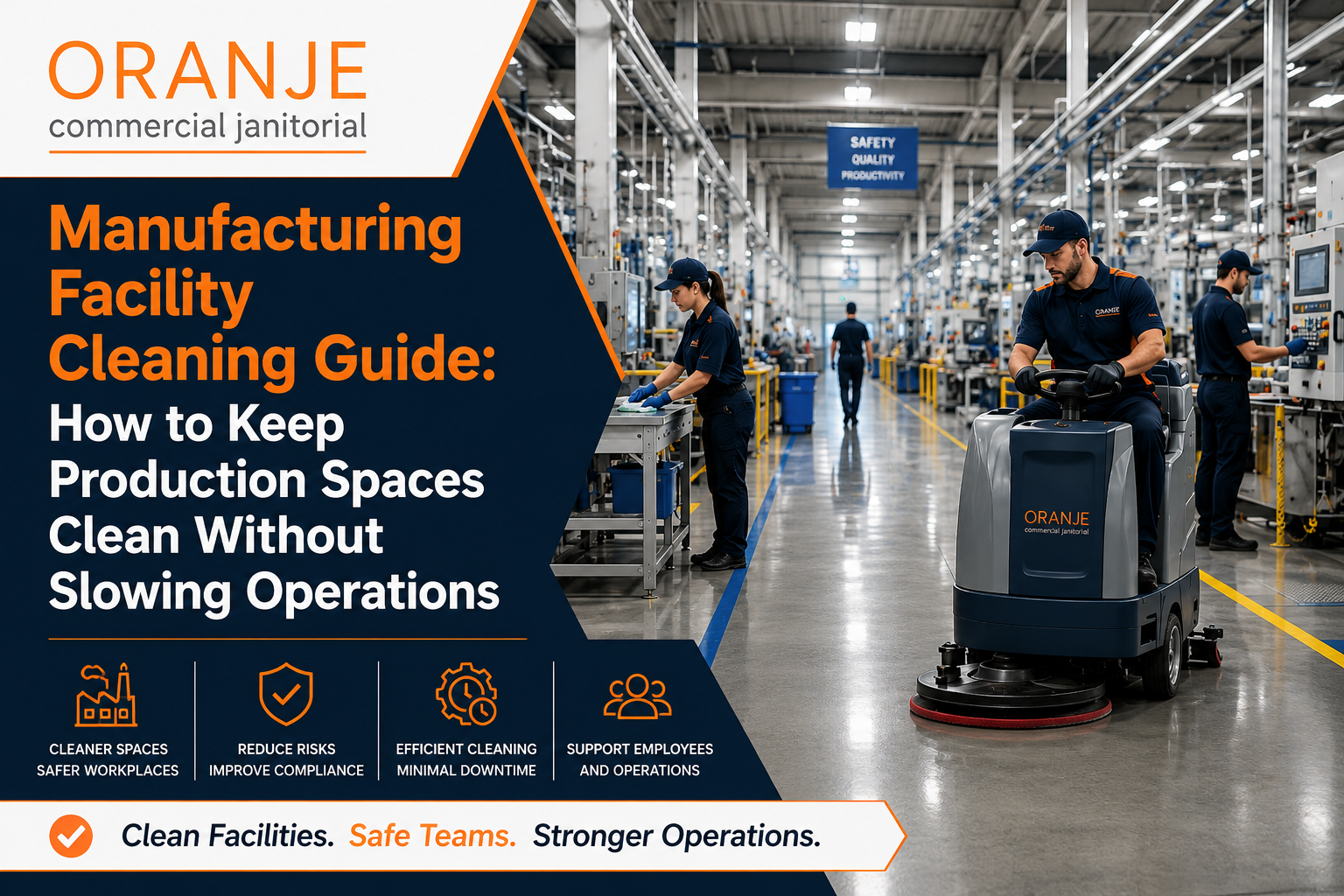
Manufacturing spaces don’t stay clean by accident. Between production movement, equipment use, foot traffic, packaging materials, dust, spills, and shift changes, cleanliness can quickly become part of the operational load.
The challenge is that cleaning a manufacturing facility is not the same as cleaning a standard office. Production areas are active. Equipment may be running. Teams may be working around fixed schedules. Some areas can be cleaned daily, while others need to wait for planned downtime.
That is why manufacturing facility cleaning works best when it is planned around the way the facility actually operates. The goal is not to interrupt production. The goal is to support it.
Why Cleaning Matters in a Manufacturing Environment
In a manufacturing setting, cleaning affects more than appearance. It supports safety, workflow, quality control, and the general condition of the facility.
Dust buildup around work areas can affect visibility and housekeeping standards. Dirty floors can create slip concerns. Restrooms, breakrooms, and shared spaces affect employee comfort. Exterior entry points and loading areas can track dust and debris into the building. Over time, small cleaning gaps can turn into larger operational problems.
For plant managers and facility teams, the question is usually not, “Do we need cleaning?” The better question is, “How do we keep cleaning consistent without interfering with production?”
That is where a practical cleaning plan makes the difference.
Cleaning Around Production, Not Against It
Manufacturing facilities have different rhythms. Some run one shift. Others operate nearly around the clock. Some areas are active all day, while others pause between production runs.
A good cleaning plan works with those patterns.
For example, high-traffic employee areas may need attention during the day. Production floors may need cleaning between shifts. Equipment-adjacent areas may require careful scheduling so cleaning teams are not working in the way of operators, forklifts, or maintenance crews. This is where cleaning support for active production buildings helps keep the facility maintained without creating unnecessary disruption.
This type of planning helps avoid interruptions. It also gives cleaning teams clear windows to complete tasks safely and correctly.
In Phoenix manufacturing facilities, this matters even more because dust and outdoor debris can enter buildings quickly through dock doors, roll-up doors, and employee entrances. If those areas are not managed regularly, the mess moves deeper into the facility.
Key Areas That Need Regular Attention
Every manufacturing site is different, but most facilities have several cleaning zones that need consistent oversight. For larger plants, plant floor and shared-area upkeep needs to be planned around production activity, employee movement, and access requirements.
Production Floors
Production floors often collect dust, packaging debris, residue, and tracked-in dirt. These areas need regular sweeping, floor care, and spot attention based on the type of work being done.
Cleaning teams should understand traffic flow, restricted zones, and active work areas before starting. In many cases, cleaning is scheduled during shift changes or low-activity periods.
Equipment Surrounding Areas
Cleaning around equipment takes care and coordination. The goal is to keep the surrounding floor, exterior surfaces, and nearby work zones clean without interfering with machinery or controls.
Cleaning staff should not move parts, open panels, or handle anything outside the agreed cleaning scope. Clear boundaries help protect both the cleaning team and the facility’s equipment.
Restrooms and Locker Areas
Employee areas can become busy fast, especially during shift changes. Restrooms, locker rooms, and handwashing stations need dependable cleaning routines because they directly affect worker comfort and facility standards.
These spaces should be checked based on usage, not just a fixed once-a-day schedule.
Breakrooms and Shared Spaces
Breakrooms often collect food spills, crumbs, trash, and surface residue. When multiple shifts use the same space, cleaning needs to happen often enough to keep conditions steady throughout the day.
Tables, counters, sinks, microwaves, vending areas, and floors all need routine attention.
Entry Points and Loading Areas
Manufacturing buildings often have busy entrances, receiving areas, and dock zones. These areas pull in dirt from outside and can quickly spread it through the building.
Routine sweeping, floor cleaning, and exterior pressure washing around entries can help reduce what gets tracked inside. For facilities with frequent deliveries or storage movement, cleaning for warehouse and dock-heavy spaces may also need to be coordinated with interior janitorial routines.
Safe Product Use in Industrial Settings
Cleaning products in a manufacturing facility should never be used casually. The wrong product, wrong surface, or wrong timing can create problems.
Facility managers should know what products are being used, where they are being applied, and whether they are suitable for the space. Cleaning teams should also follow product labels, safety instructions, and any site-specific requirements.
This is especially important around production zones, food-related facilities, sensitive materials, or areas where employees work close to cleaned surfaces.
A good cleaning program keeps product use simple, controlled, and documented. It should not rely on guesswork.
Shift-Based Cleaning Helps Keep Work Moving
For many facilities, cleaning works best when it is divided by shift or activity level.
A sample approach may look like this:
- Light cleaning during active production hours
- Restroom and breakroom checks during each shift
- Floor care during low-traffic windows
- Deeper cleaning during planned shutdowns or weekend hours
- Spot response when spills or urgent issues occur
This prevents the cleaning team from trying to do everything at once. It also gives supervisors and facility managers a better way to track what is happening throughout the day.
For larger plants, this can also include communication logs so the next shift knows what was completed, what needs attention, and whether any areas were skipped due to production activity.
Planning Cleaning During Downtime
Some cleaning tasks cannot be done while production is active. These may include deeper floor work, high dusting, detailed cleaning around equipment zones, or larger-area cleaning after a production run.
That is where downtime planning helps.
Instead of waiting until the last minute, facility teams should identify cleaning tasks that need longer access windows. These tasks can then be scheduled during planned maintenance, slower production periods, weekends, or shutdown windows. The same planning mindset applies to preparing workspaces after construction activity, where cleaning needs to be scheduled before teams or tenants begin using the space.
This is useful for:
- Deep floor cleaning
- Dust removal in hard-to-reach areas
- Cleaning around production support zones
- Detailed restroom or locker room cleaning
- Exterior surface cleaning near entrances and loading areas
When cleaning is planned this way, it feels less disruptive. The cleaning team knows where to be, production teams know what to expect, and supervisors can verify the work before operations restart.
Coordination Between Cleaning Teams and Facility Staff
Manufacturing cleaning depends heavily on coordination. Cleaning crews need to know where they can work, when they can enter certain areas, and what safety rules apply.
At the same time, facility staff need a clear way to communicate issues. This is also why choosing a cleaning partner for operational sites should involve more than price. The provider needs to understand access rules, shift timing, supervisor communication, and the difference between production and non-production spaces.
This may include:
- Daily notes between cleaning supervisors and facility contacts
- Area access instructions
- Shift handoff notes
- Reporting for spills or recurring problem spots
- Updates when production schedules change
The more communication there is, the fewer assumptions are made.
For example, if a production area is running late, the cleaning team may need to adjust the schedule. If a dock area sees heavier traffic than usual, it may need an extra sweep. If a restroom is busier during one shift, the cleaning schedule may need to change.
These are small adjustments, but they are what keep cleaning practical in a real manufacturing environment.
How Manufacturing Cleaning Connects with Other Facility Services
Manufacturing facilities rarely need just one type of cleaning. Daily janitorial work may keep shared areas under control, but other services often support the overall condition of the building.
Floor cleaning is one of the most important. Production areas, walkways, and common corridors take heavy wear. Depending on the floor type, floor care for heavy-use facility areas can help reduce buildup and keep surfaces easier to maintain.
Pressure washing can also help around exterior areas, dock zones, dumpster pads, entryways, and walkways where dust, grime, or residue collects. This does not replace regular interior cleaning, but it helps control what gets tracked inside.
For facilities with offices attached to production areas, office cleaning also needs to be coordinated with the plant schedule. Administrative spaces, conference rooms, and front offices often require a different cleaning rhythm than the production floor.
Disinfection may also be added in shared employee spaces, especially restrooms, breakrooms, locker rooms, and frequently touched surfaces.
The point is simple: manufacturing cleaning works better when all services are planned together instead of handled separately.
Best Practices for a Practical Manufacturing Cleaning Plan
A cleaning plan should be easy to understand and realistic for the facility.
Here are a few best practices that usually help:
Start With Area Priorities
Not every space needs the same cleaning frequency. Production floors, restrooms, breakrooms, entrances, and dock areas usually need more attention than low-use storage rooms.
Match Cleaning to Shift Activity
Cleaning should follow how the building is used. A facility with multiple shifts will need a different schedule than a plant that closes at 5 p.m.
Define What Cleaning Teams Can and Cannot Touch
This matters around machinery, tools, production materials, and restricted zones. Clear limits protect everyone.
Keep Communication Simple
A daily log, supervisor notes, or shared reporting process can prevent small issues from being missed.
Review the Plan Regularly
Production schedules change. Staffing changes. Facility traffic changes. Cleaning should be reviewed from time to time so the plan stays useful.
Final Thoughts
Manufacturing facility cleaning is not just about keeping a building clean. It is about supporting the daily flow of work.
When cleaning is planned around production schedules, shift activity, safe product use, and clear communication, it becomes easier to maintain the facility without slowing the operation down. This is similar to managing year-round facility cleaning needs, where the best results usually come from planning ahead rather than reacting after conditions slip.
For Phoenix manufacturers, where dust, heat, and constant facility movement are part of the environment, a structured cleaning routine can help keep work areas, shared spaces, and support zones in better condition.
Oranje’s commercial cleaning services are built around that kind of practical coordination. From janitorial support and floor care to industrial cleaning, pressure washing, and shared-area upkeep, the focus is on keeping facilities clean while respecting how the business actually operates.
In manufacturing, that balance matters. Clean spaces support safer movement, better organization, and smoother day-to-day operations.

Joshua Woodworth is the CEO of Oranje Commercial Janitorial in Phoenix, AZ, bringing over 15 years of experience in facilities management with a focus on large custodial operations in government, Class-A, multi-tenant, multi-site, and K-12/higher education settings. A graduate of the University of Wisconsin-Platteville, he has overseen multi-million-dollar accounts and managed sites exceeding 10 million square feet, including athletic, academic, administrative, research, and residential facilities. Known for his expertise in custodial transitions and relationship management, he places a strong emphasis on developing long-term partnerships, which is reflected in his daily approach to work. Outside of work, Joshua enjoys volunteering in youth sports, traveling with his family, and exploring new ways to elevate the cleaning industry.